
The Amenities That Make a Difference in Today’s Workplace
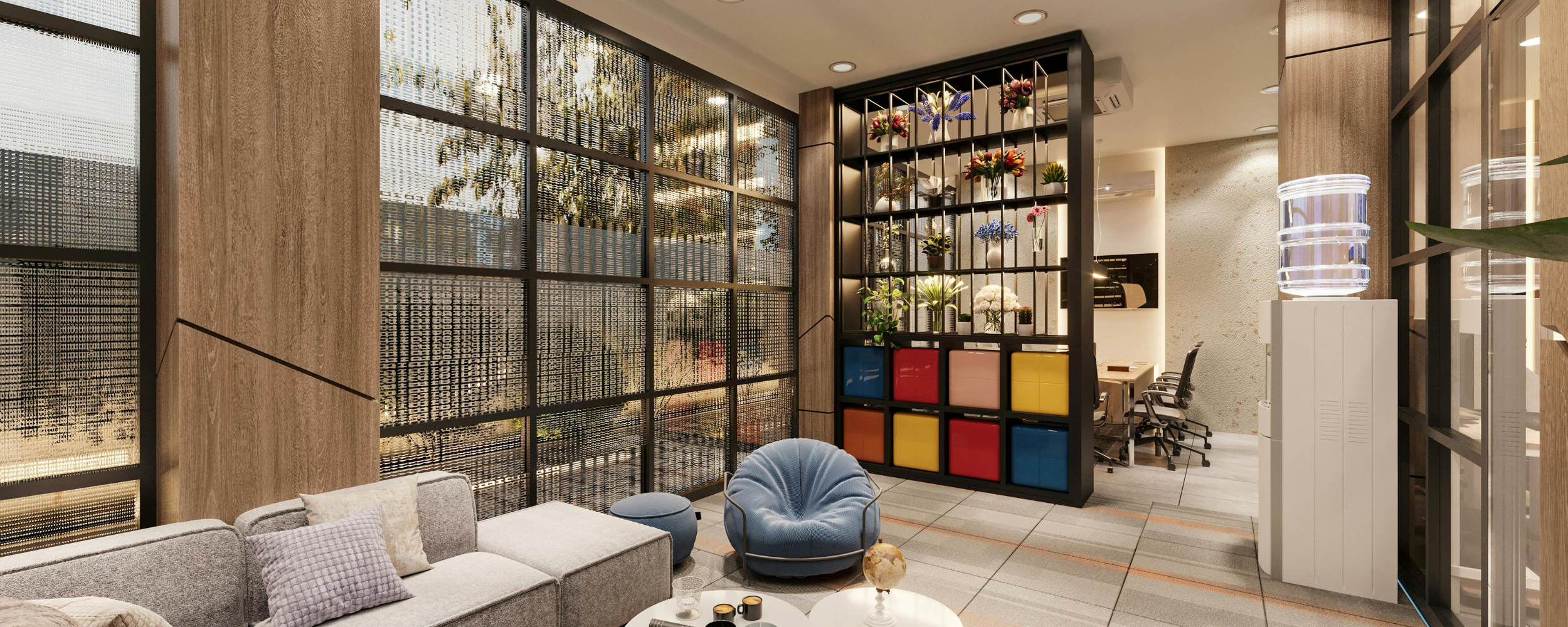
Workplace amenities are no longer just perks or visual selling points. They are increasingly part of the broader strategy behind creating offices that people want to use and return to. The strongest amenities do more than fill space or add polish; they reduce friction in the workday and make the office more aligned with how employees actually function, strengthening both employee experience and overall workplace value [2], [3].
What matters most is not whether an amenity looks impressive on a tour, but whether it supports people in meaningful, everyday ways. Features that help employees recharge, refocus, eat well, move more, collaborate comfortably, or simply navigate the day with less friction can have a stronger impact than amenities designed mainly for appearance [1].
This shift reflects a broader change in what the office is expected to do. In many markets, the workplace is no longer judged only by location, square footage, or finish level. It is increasingly judged by whether it supports the realities of the workday; whether people can focus when they need to, connect when they want to, and access the kinds of spaces and services that make time on site feel worthwhile. Recent workplace and real estate trends suggest that the strongest amenities are not the ones that simply add appeal; they are the ones that support how people actually work [1]–[3].
This blog focuses on four amenity categories that consistently stand out in workplace and real estate research; food and beverage access, quiet and restorative space, movement- and outdoor-supportive features, and hospitality- and community-oriented spaces. Together, they reflect core workday needs; to refuel, focus, reset, move, and connect [1]–[3].
Food and Beverage Access That Supports the Workday
Food and beverage access is one of the clearest examples of an amenity that can meaningfully support the workday. Cafés, break areas, and refreshment spaces may not always seem essential, but they often shape whether the office feels convenient, welcoming, and easy to use. When food and drink options are thoughtfully integrated into the workplace, they can reduce disruption, create opportunities for informal interaction, and make time on site feel more manageable.
This is not simply about offering snacks or adding a café for appearance. The stronger opportunity lies in creating a food and beverage environment that supports daily rhythm and makes healthier options easier to access. A 2021 systematic review found evidence that workplace cafeteria and other multicomponent interventions can improve fruit and vegetable intake, dietary intake, some health outcomes, and healthy food sales [4]. That same principle applies to hydration. Easy access to high-quality drinking water is part of a workplace that functions well throughout the day.
The Centers for Disease Control and Prevention (CDC) describes food service guidelines as standards for healthier food, beverages, and food service operations in worksite settings [5]. WELL reinforces this through its Nourishment concept and its emphasis on promoting water consumption by making high-quality drinking water easily accessible to occupants [6], [7].
The right level of food and beverage support will vary by building, tenant mix, and workplace model. Not every office needs a full cafeteria. What matters is whether the space makes it easier for people to access food, beverages, and water in practical, supportive ways. Workplace food environment research also suggests these conditions vary across work settings, making it important to match food and beverage strategy to how people actually use the space [8]. When that happens, this category of amenity stops being a perk and starts functioning as part of the everyday infrastructure of a healthier, more usable workplace.
Quiet, Focus, and Restorative Spaces
Another amenity category that stands out is access to spaces that support focus and offer relief from distraction. Recent workplace research suggests employees value quiet or deep focus areas as well as spaces to rest and recharge, while commentary on quiet work environments notes that focused work especially benefits from lower-distraction settings [1], [9]. The goal is not silence throughout the workplace; different kinds of work call for different settings.
What matters most is giving people access to the right setting for the task at hand. People need places where they can concentrate, reset between meetings, take a private call, or step away from the intensity of an open-plan environment for a few minutes. Restorative space research suggests these environments work best when they offer some combination of retreat, softer sensory conditions, spatial coherence, and a sense of fit for different users, rather than simply placing a chair in an underused room [10].
In practice, this can take several forms; quiet rooms, enclosed focus spaces, library-style zones, smaller retreat rooms, or calming areas with softer lighting, more comfortable seating, and greater acoustic separation from busier parts of the office. The World Green Building Council’s office report identifies noise and acoustics, interior layout, and views of nature as important factors shaping concentration, collaboration, confidentiality, and creativity, reinforcing the idea that quieter and more restorative spaces should be considered part of the broader workplace strategy, not an isolated add-on [11].
WELL supports this broader approach through concepts related to sound and mind, including strategies intended to create more supportive environments for focus, restoration, and mental well-being [12]. The value of these spaces lies in giving people places to focus when they need to and places to reset when the day becomes noisy, demanding, or fragmented [9], [12].
Movement and Outdoor Features
Another amenity category that stands out is access to features that make it easier to move, get outside, and reset during the day. In CBRE’s 2025 Americas Office Occupier Sentiment Survey, outdoor amenities or terraces were the most frequently cited experience-related feature affecting rent negotiations at 44 percent, while fitness facilities were cited by 32 percent of respondents [2]. JLL likewise identifies health and wellness initiatives and outdoor spaces as two of the amenity areas where owners can gain the most traction in tenant demand [3].
This category can take many forms; terraces, courtyards, walking paths, bike storage, showers, fitness rooms, or simply layouts that make outdoor breaks and active commuting more practical. The CDC notes that workplace supports such as on-site bike storage and showers can help promote physical activity, and its employer guidance also points to active transportation programs as a relatively low-cost way to facilitate increased activity [13]. WELL reinforces the same general approach through its Movement concept, including strategies related to active transportation support, exterior active design, and physical activity spaces [14]. These kinds of features are especially useful because they do not depend on a single formal wellness program or a dedicated onsite fitness center; they are built into the way the workplace functions.
Outdoor access matters for reasons beyond movement alone. The World Green Building Council identifies lighting and daylighting, interior layout, and active design, and biophilic design and quality views among the office features that shape health, well-being, and productivity [11]. WELL reflects many of these same priorities through concepts related to movement, light, and mind [14]. In practice, outdoor and movement-supportive amenities often work best together; a terrace that invites short breaks, a walking route that makes stepping away easier, or a bike room and shower that support active commuting. The broader value lies in making the office feel more restorative, less sedentary, and easier to use throughout the day [11], [13], [14].
The most effective features in this category are not only about fitness. They support a healthier daily rhythm by giving people more opportunities to move, reset, access daylight, and spend time in spaces that feel less confined to the desk [2], [3], [11], [13], [14].
Hospitality and Community-Oriented Spaces
The fourth category that stands out is access to spaces and services that make the office feel more welcoming, connected, and easier to use. This can include shared lounges, flexible meeting areas, hospitality-style reception or concierge support, and spaces that make it easier for people to gather informally throughout the day. JLL identifies hospitality services as one of the main amenity areas where owners can differentiate office buildings, arguing that experience now matters alongside the physical space itself [3]. Gensler’s recent workplace research similarly highlights cafés, lounge and hub spaces, and dedicated team rooms among the features employees value most inside and beyond the office [1].
A shared lounge or well-designed tenant space can support informal conversations, short resets between meetings, or more flexible ways of working away from the desk. Similarly, hospitality-minded services can influence whether a building feels merely functional or genuinely supportive. This does not mean every office needs an elaborate event program or highly programmed social space. What matters is whether the environment makes it easier for people to connect, navigate the day, and feel welcomed when they arrive.
There is also a broader building-performance reason this category matters. A recent study on tenant satisfaction and commercial building performance found that higher tenant satisfaction was associated with stronger renewal intention, a greater likelihood of recommending the property, and a lower probability of moving out [15]. While hospitality and community-oriented features are only one part of that broader experience, they help illustrate an important point; the office is increasingly evaluated not only by what it contains, but by how it makes people feel and function over time.
WELL also reflects this broader people-centered approach through concepts related to community, mental well-being, and supportive workplace experience [14]. The features in this category are not about adding social space for its own sake. They help create a workplace that feels more usable, more welcoming, and more connected to the needs of the people using it each day [1], [3], [14], [15].
Conclusion
Together, these four categories offer a more practical way to think about amenities. They support core workday needs; to refuel, focus, reset, move, and connect [1]–[3], [11], [14].
What makes these categories especially useful is that they are not isolated perks. They work best when they reinforce one another and are considered as part of the daily experience of the building. That does not mean every property needs to deliver all of them at once. In many cases, the more realistic approach is to prioritize the features that address the most immediate needs of the workplace and integrate others over time. The strongest amenity strategies are not always the most extensive; they are the ones that make the office feel more functional, more supportive, and more aligned with how people actually work [1], [3], [14].
This is also why amenity planning should not be treated as a separate layer added after the main workplace strategy is already set. Amenities are most effective when they are considered as part of the broader experience of the building; how people arrive, where they can focus, how they take breaks, how they move, and where they connect. Seen in that light, amenities become less about image and more about creating a workplace that people can use well over time [2], [3], [15].
References
[1] Gensler, “The Top 10 Things Employees Value Inside and Beyond the Office,” Feb. 27, 2026.
[2] CBRE, 2025 Americas Office Occupier Sentiment Survey, 2025.
[3] JLL, “Three amenities owners are adding to office buildings,” 2025.
[4] A. Naicker, A. Shrestha, C. Joshi, W. Willett, and D. Spiegelman, “Workplace cafeteria and other multicomponent interventions to promote healthy eating among adults: A systematic review,” Preventive Medicine Reports, vol. 22, 2021.
[5] Centers for Disease Control and Prevention, “Food Service Guidelines,” Jan. 8, 2024.
[6] International WELL Building Institute, “Nourishment,” WELL Standard, 2026.
[7] International WELL Building Institute, “Drinking water promotion,” WELL Standard, 2026.
[8] L. Geboers, S. K. Djojosoeparto, F. C. Rongen, and M. P. Poelman, “The role of the workplace food environment in eating behaviors of employees at small and medium-sized enterprises: a qualitative study in the Netherlands,” BMC Public Health, 2025.
[9] H. Kalmanovich-Cohen and S. J. Stanton, “Leveraging quiet: The power of choosing your workspace,” Industrial and Organizational Psychology, vol. 17, 2024.
[10] F. Tuz-Johora and I.-S. Kim, “An Analysis of Restorative Space Design Standards Through a Theory-Based Framework,” Architectural Research, vol. 28, no. 2, 2026.
[11] World Green Building Council, Health, Wellbeing and Productivity in Offices: The Next Chapter for Green Building, 2014.
[12] International WELL Building Institute, WELL Building Standard v2, Sound and Mind concepts, 2026.
[13] Centers for Disease Control and Prevention, “Employers,” Active People, Healthy Nation, Sep. 29, 2025.
[14] International WELL Building Institute, WELL Building Standard v2, 2026.
[15] M. Hu, N. Kok, and J. Palacios, “Tenant Satisfaction and Commercial Building Performance,” 2023.